Family and school are often studied as separate influences on student outcomes. However, their interaction may be just as important as their individual effects.
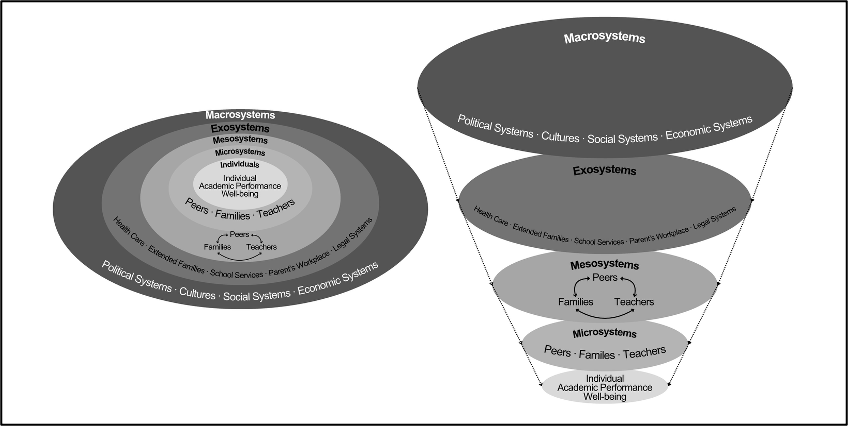
Within Bronfenbrenner’s Ecological Systems Theory, the mesosystem refers to the interconnections between a child’s immediate environments. In educational research, the family–school relationship represents one of the most influential yet underexamined mesosystems.
Parental involvement, communication patterns between parents and teachers, and shared expectations about learning form an invisible relational bridge that students constantly navigate. When messages from home and school are aligned, students tend to experience greater emotional security and academic engagement. When they are misaligned or conflictual, students may face increased stress, confusion, or disengagement.
Importantly, strong family support does not automatically translate into positive school experiences—and vice versa. Understanding how these contexts interact, rather than treating them as independent predictors, is essential for explaining variability in student adjustment and achievement.
Future posts will further explore how contingent effects between family and school contexts may shape student development over time.
| Type of Bullying | Definition | Examples | Effects |
| Physical Bullying | Harming someone’s body or possessions using physical force (Olweus, 1993). | Hitting, kicking, pushing, or damaging personal items. | It may lead to physical injuries and emotional trauma, such as fear and anxiety. |
| Verbal Bullying | Using words to harm others, attacking them verbally (Olweus, 1993). | Name-calling, insults, teasing, taunting. | This may cause emotional distress, affecting self-esteem and mental health. |
| Relational Bullying | Damaging someone’s relationships or social status (Crick & Grotpeter, 1995). | Spreading rumours, excluding from a group, encouraging others to alienate. | This may lead to feelings of isolation, social anxiety, and humiliation. |
| Cyberbullying | Bullying through digital devices like phones, computers, or social media (Kowalski et al., 2012). | Sending harmful messages, sharing embarrassing content, spreading rumours online. | This could be pervasive and difficult to escape, often leading to depression and anxiety. |

 Chenxi Shhen | Academic Site
Leave a comment